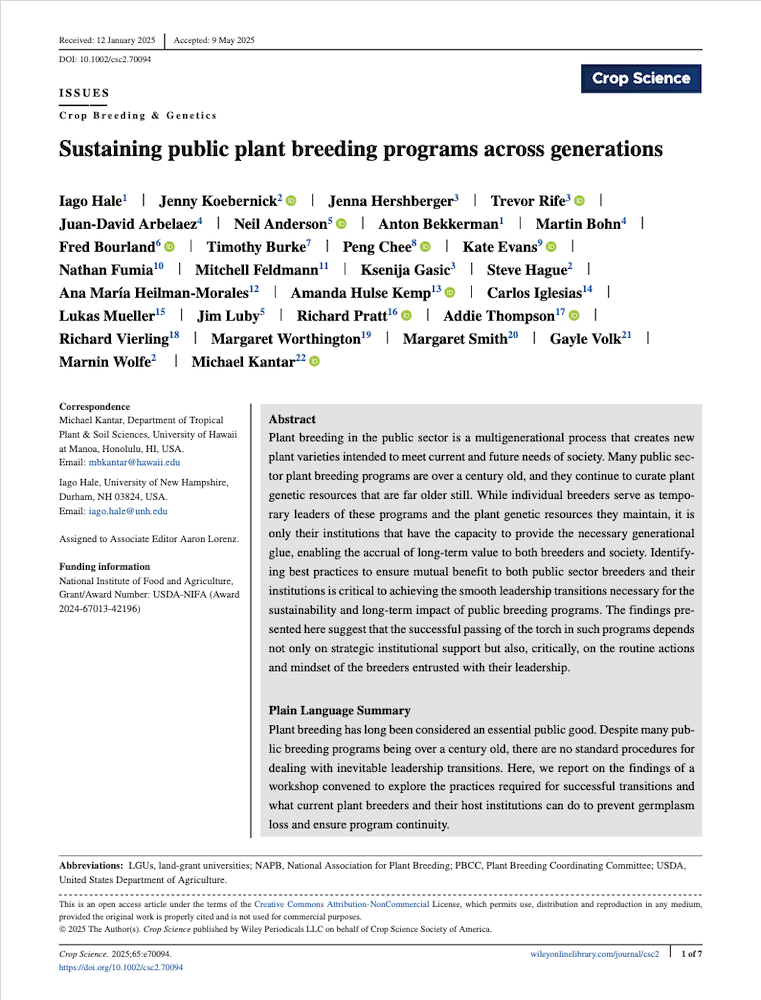
Transitions in Plant Breeding
Public plant breeding is multigenerational, yet leadership transitions risk loss of germplasm, data, and institutional knowledge. A national workshop identified best practices for documenting program value, organizing materials and data, planning personnel overlap, and strengthening institutional support. A cultural shift toward shared institutional ownership is essential to sustain programs across generations.
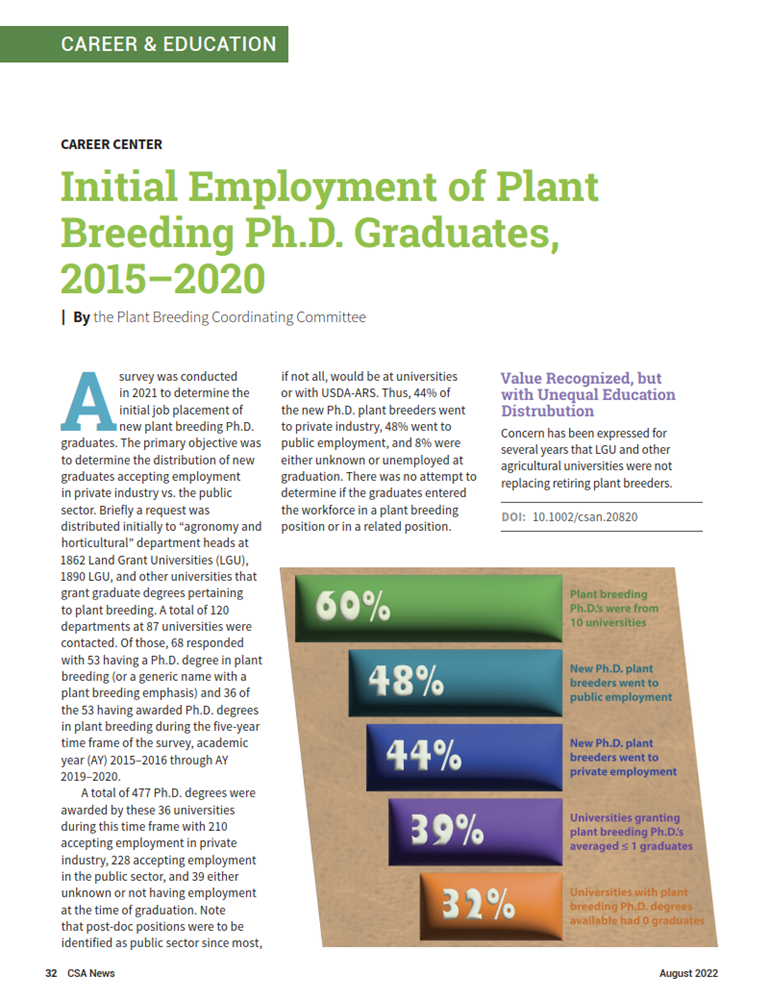
Plant Breeding Employment
A 2021 survey of U.S. universities found 477 plant breeding Ph.D. graduates from 2015–2020. Of these, 48% entered public-sector roles and 44% joined private industry, with 8% unemployed or unknown at graduation. Training is concentrated: 10 universities produced 60% of graduates, while many programs awarded few or none, highlighting uneven educational capacity.
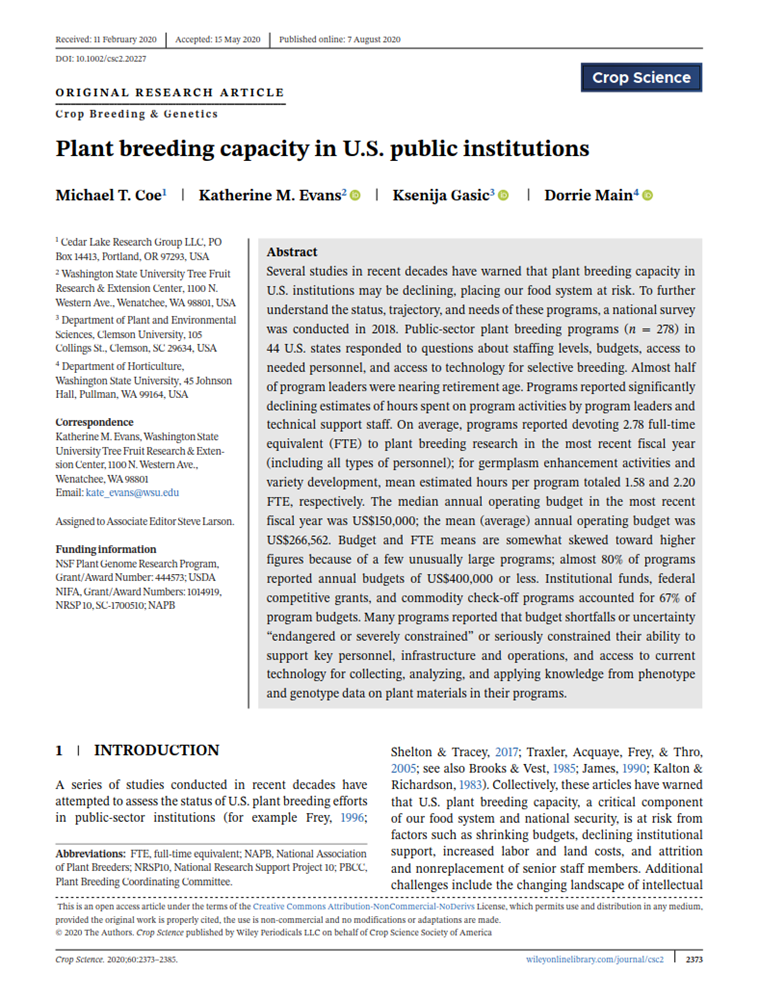
Plant Breeding Capacity
A 2018 national survey of 278 U.S. public plant breeding programs found declining staffing, aging leadership, and tight budgets, with median annual funding of $150,000. Many programs reported constraints in hiring, infrastructure, and access to modern genotyping and data tools. Without sustained investment, public breeding capacity—and long-term food security—remains at risk.
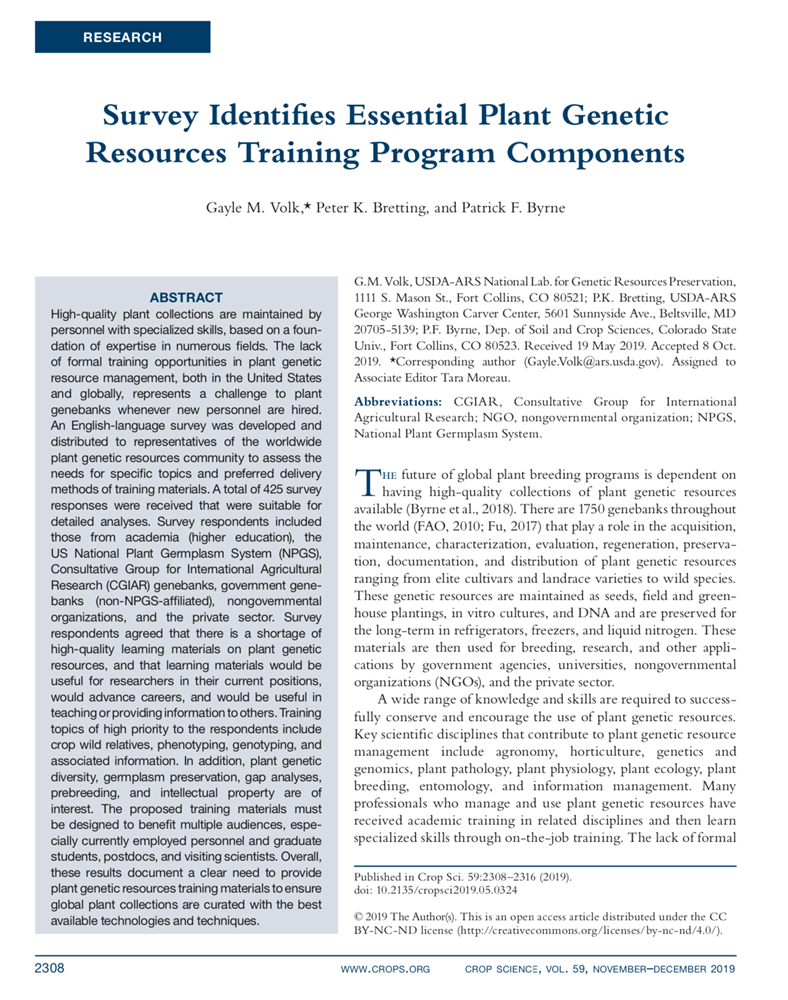
Training for Genetic Resources
Although 1,700+ genebanks conserve global crop diversity, formal training in plant genetic resources management is lacking. Respondents across sectors highlighted urgent needs in crop wild relatives, genotyping, phenotyping, data management, preservation, and regulations, favoring accessible online formats. Investment in modern training is essential to ensure effective conservation and future breeding.
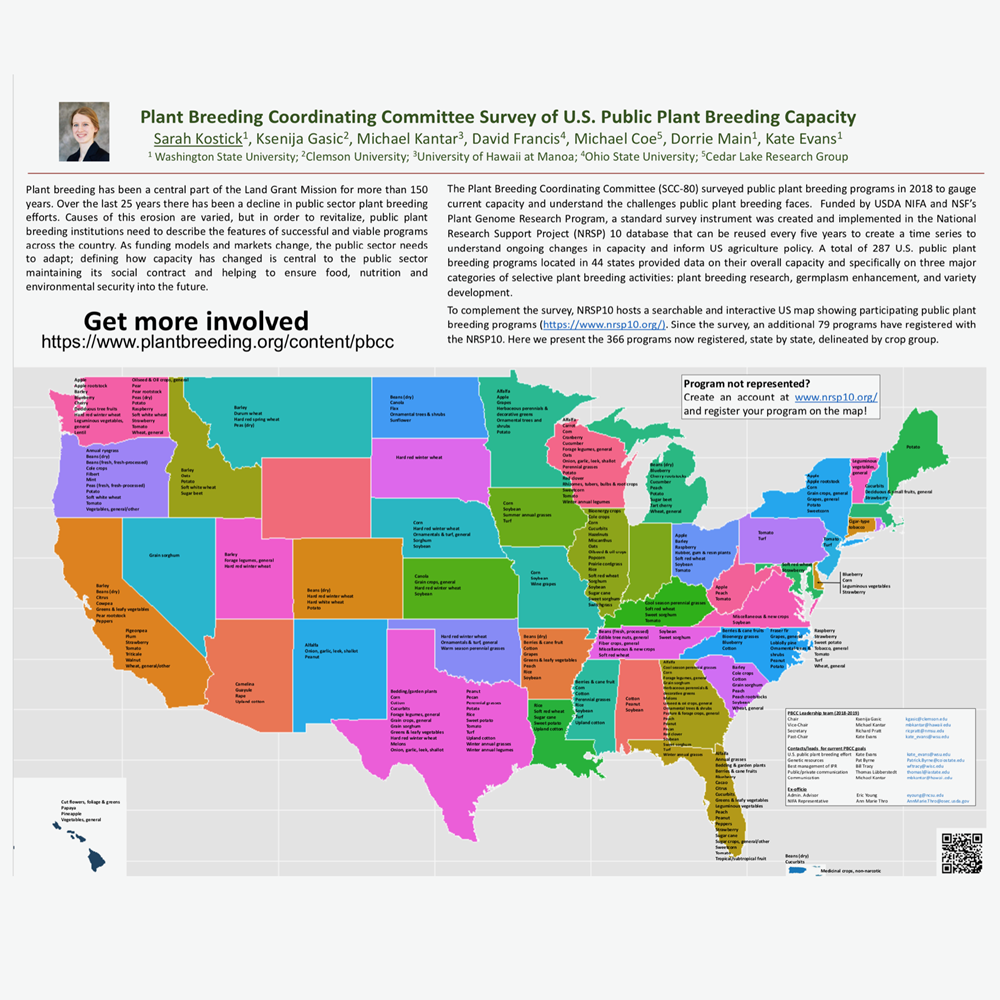
Breeding Capacity Poster
Public plant breeding has declined over the past 25 years, despite its central role in the Land Grant mission. A national survey identified 287 programs across 44 states and created a standardized system to track capacity in research, germplasm enhancement, and variety development. The results provide a baseline to inform policy and strengthen public breeding for long-term food and environmental security.
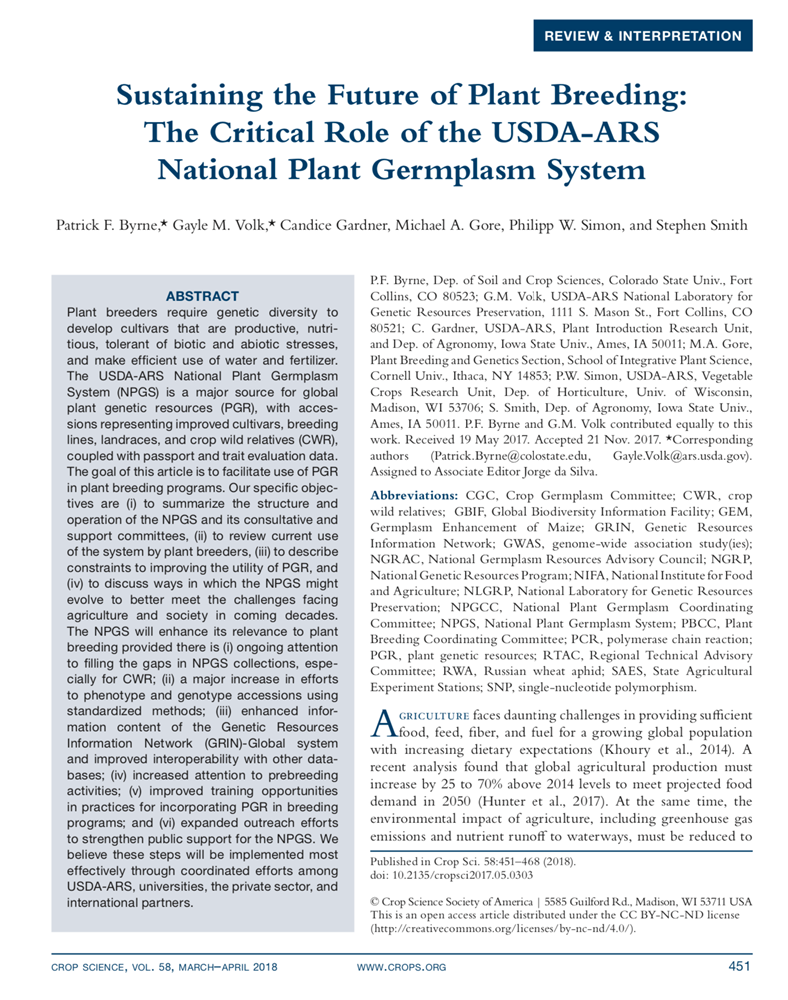
NPGS
Agriculture must increase production while reducing environmental harm, and plant breeding relies on broad genetic diversity to do so. The USDA National Plant Germplasm System conserves over 500,000 accessions of cultivars, landraces, and crop wild relatives. Expanding phenotyping, genotyping, prebreeding, data integration, and cross-sector collaboration is essential to sustain future crop improvement.
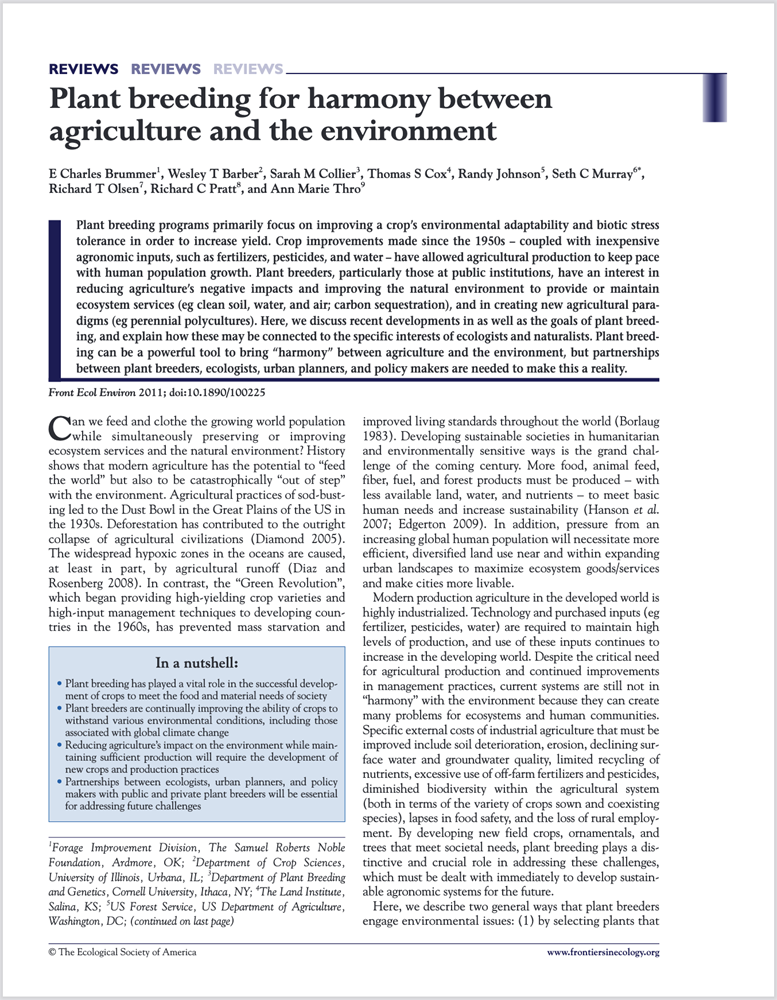
Plant Breeding Harmony
Past yield gains fed a growing population but also drove soil degradation, nutrient runoff, and biodiversity loss. Breeding crops with greater water and nutrient efficiency, climate resilience, and perennial root systems can reduce impacts and enhance ecosystem services. Stronger collaboration among breeders, ecologists, and policy makers is key to aligning agriculture with long-term environmental health.